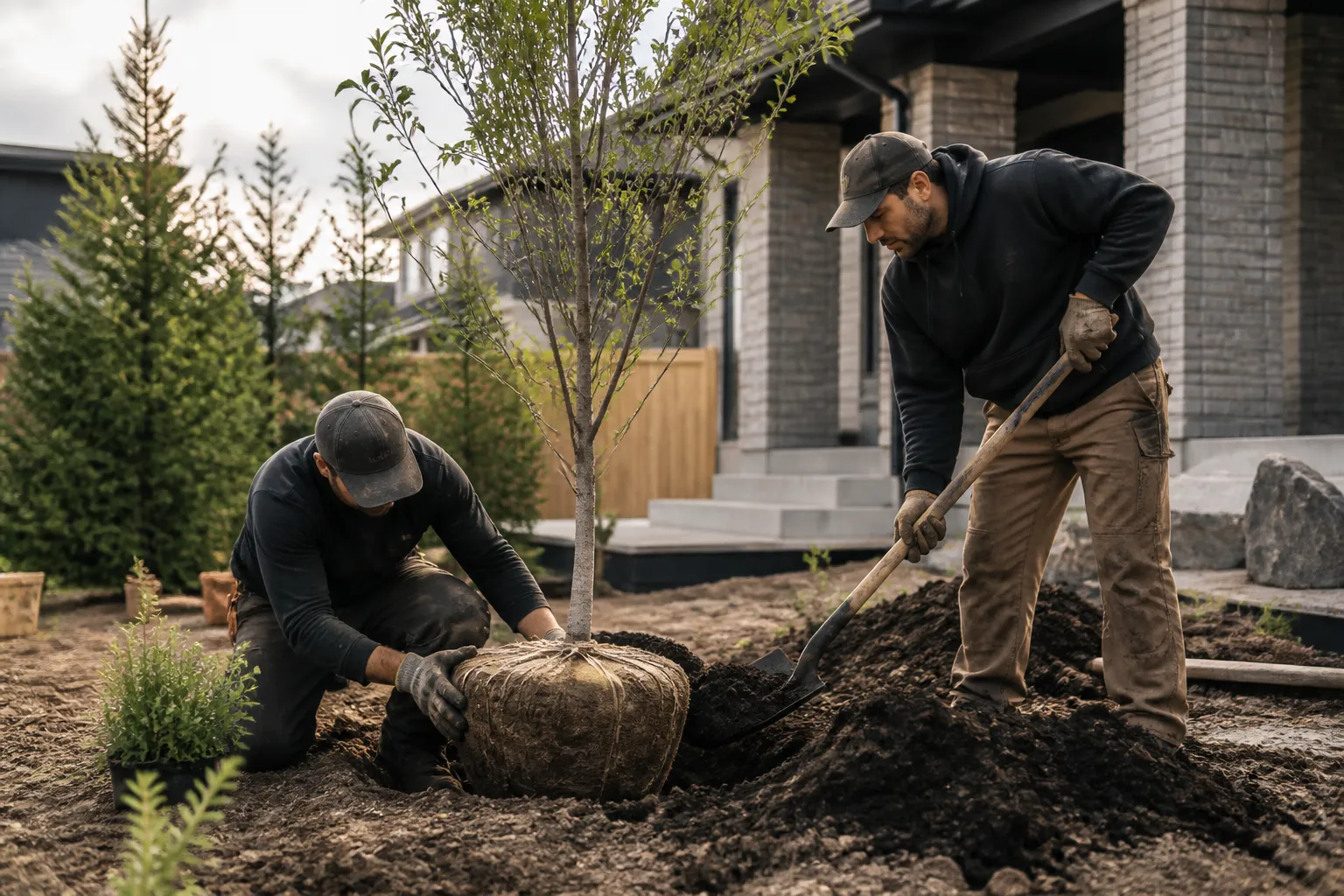
A new tree should settle into the site, not struggle against it. If the ground is compacted, the root ball sits too deep, or the wrong species is chosen for the space, the tree can stall early and never reach its potential.
Edmonton Tree Service helps property owners plan and complete tree planting around Edmonton, Alberta T5H2S9 with attention to site conditions, root space, and long-term structure. We look at where the tree will grow, what it needs near the root zone, and how to set it up for steady establishment from day one.
Tree planting is more than digging a hole and setting a young tree into the ground. The final result depends on the available space, soil condition, drainage, sun exposure, and the mature size of the species you want to plant. A tree that looks small now may eventually spread across a driveway, press against a structure, or crowd other plantings if it is not matched to the site.
We plan each planting around the actual property conditions at Edmonton, Alberta T5H2S9. That includes the root zone, nearby hard surfaces, overhead clearance, and the way the tree will fit with the rest of the landscape as it develops.
Before any tree goes into the ground, we consider the site and the role the tree is meant to play. Some trees are planted for shade, others for screening, curb appeal, or to replace a removed tree. The goal is to place the right tree where it has room to establish and grow without creating avoidable conflict later.
We look at the planting area, the root zone, the soil surface, and nearby structures or utilities that may influence placement. This helps determine whether the site can support a particular species and how much room the tree will need as it matures.
Different trees suit different conditions. American elm, green ash, Manitoba maple, trembling aspen, balsam poplar, spruce, pine, birch, crabapple, and mountain ash each bring their own growth habit, canopy shape, and space needs. Choosing with the mature form in mind is one of the most important parts of the job.
We prepare the planting area with care for the root flare and root zone so the tree is not set too deep or left unstable at the surface. A tree that starts well positioned is more likely to establish steady roots and develop balanced growth.
Many property owners call for tree planting after removal, landscape changes, or when a yard feels bare and unfinished. A thoughtful replacement can restore shade, create a cleaner visual line, or bring structure back to a property without crowding the space.
Tree planting can also help when a site needs a new focal point, a buffer between uses, or a long-term tree that suits the property better than an older specimen that was removed. The new tree should fit the present site and the future site, not just the open space available today.
Tree planting success depends on more than the species name on the tag. Soil conditions, planting depth, root condition, and early care all influence how fast the tree begins to establish. If these details are missed, a young tree may show slow growth, sparse canopy development, or signs of stress that are hard to reverse later.
We pay close attention to the parts of the tree that matter most during establishment: the root flare, the root ball, the surrounding soil, and the space around the trunk. These details influence stability, water uptake, and how quickly the tree can start building new roots.
Young trees do best when the surrounding soil gives roots room to move outward. Compacted or disturbed soil can limit root expansion and reduce establishment. Planting depth also matters because buried root flare tissue can lead to decline over time.
The canopy should have room to expand without immediate conflict. If branches will quickly crowd a fence, utility line, walkway, or another tree, the placement needs to be reconsidered before planting.
Early placement affects later pruning needs. A tree with strong spacing and room to develop a balanced crown is easier to manage as it matures than a tree forced to grow around barriers from the start.
Adding a new tree beside established growth requires more planning than planting into an open area. The new root system must have space without competing too heavily with nearby trees, and the canopy should not be set up to overlap immediately with a more established specimen unless that is the intended design.
We look at root competition, shade patterns, and the mature spread of the existing trees before deciding where a new planting belongs. This matters on properties with mixed trees, where one poor placement can create crowding, weak growth, or awkward pruning later on.
Tree planting at Edmonton, Alberta T5H2S9 calls for attention to local species, property conditions, and city-related tree factors that may affect placement. Some trees are better suited to certain sites than others, especially when mature size, clearance needs, and maintenance expectations are considered together.
We also keep practical concerns in view, such as boulevard trees, public-tree requirements, elm-pruning restrictions where relevant, and utility conflicts. A new tree should support the property without creating avoidable issues for the homeowner or the surrounding site.
When a mature tree has been removed, the vacant area can be tempting for a quick replacement. That approach can create problems if the stump zone, root disturbance, or site constraints are not considered first. A replacement tree needs more than an open circle of ground.
Edmonton Tree Service can help choose a replacement tree that fits the available area and the surrounding conditions. In some cases, the replacement should be slightly offset from the original location so it has cleaner soil conditions and better room for root development.
Replacement planting works best when the new tree is selected for maturity size, shape, and resilience at the site. A smaller ornamental may suit one location, while another property may have room for a larger shade tree over time.
If the ground was disturbed by removal or stump work, the planting area may need extra attention before a new tree is set. The goal is to avoid planting directly into a weak or uneven foundation for the root system.
The first season after planting matters a great deal. A newly planted tree is shifting from a nursery environment to a property with different exposure, soil, and moisture conditions. During that period, the tree needs steadiness more than stress.
We provide practical guidance for keeping the young tree on track after planting so the roots can establish and the canopy can begin to fill out. Consistent attention early on helps reduce setbacks such as dry soil, leaning, or shallow root development.
The right tree depends on available space, the purpose of the planting, and how much room the mature canopy and root system will need.
Sometimes yes, but the area should be checked for stump disturbance, root competition, and soil condition before a new tree is placed there.
That depends on the site, but common options may include American elm, green ash, Manitoba maple, spruce, pine, birch, crabapple, and mountain ash when the conditions suit them.
If a tree is set too deep, the root flare can be buried and the tree may struggle as it establishes. Depth affects stability, oxygen access, and long-term health.
Only if shaping or structural correction is needed. The main focus after planting is helping the tree establish roots and a balanced early structure.
Yes. We handle tree planting for homeowners, businesses, property managers, and commercial properties across Edmonton and nearby communities.
If you want a new tree placed with long-term growth in mind, Edmonton Tree Service can help plan and complete the job at Edmonton, Alberta T5H2S9. We can discuss the site, the type of tree you want, and the placement details that matter most before the tree goes into the ground.
Call +16477005472 to arrange tree planting support. Our location is 10967 101 Street, Edmonton, Alberta T5H2S9, and we serve properties throughout Edmonton and surrounding communities.
Get Started
Tell us what’s happening with your tree and property. Whether you’re dealing with storm damage, declining branches, a hazardous tree, stump removal or planned pruning, we’ll review the tree, site access and surrounding targets to help determine the appropriate next step.